Consumer Outreach
Knowledge is power. That’s why MSBOC is committed to keeping Mississippi consumers informed when it comes to avoiding common mistakes or falling victim to unethical misrepresentation regarding home construction or remodeling. Part of this mission involves MSBOC stepping up our direct outreach to the public.
SCAM STOPPER SEMINAR
We’ve been conducting and continue to offer “Scam Stopper” Seminars throughout the state of Mississippi in cooperation with local law enforcement and community-based organizations. This seminar provides insightful information about construction-related scams and how you can better protect yourself when hiring a contractor. Topics address education and awareness; how to verify a license, documentation and references; how to spot common scams; as well as a range of other tips and practices we are happy to share with you.
Interested in finding out more or attending an upcoming MSBOC Scam Stopper Seminar? Simply contact our Outreach Coordinator, Kate Hilliard, at kate@msboc.us.
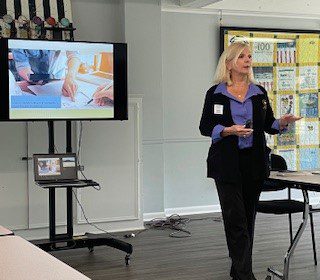
WE’LL COME TO YOU
Would you like to arrange for an MSBOC speaker to make a presentation to your civic or community group? That’s also part of our mission. Just download and complete the Speaker Request Form and email the completed PDF to kate@msboc.us.
CONSUMER PROTECTION INFORMATION LIBRARY
Through our affiliation with the National Association of State Contractors Licensing Agencies (NASCLA), MSBOC is pleased to make available these free brochures containing helpful tips on working with contractors in Mississippi. We invite you to download any or all of them as part of our ongoing Consumer Outreach initiative.
- Guide To Home Improvement Contracts
- Guide To Solar Power For The Home
- Guide To Protecting Yourself After A Disaster
- Guide To Hiring A Licensed Contractor
CONSUMER VIDEO RESOURCES
Protect Your Investment
[Clean title screen appears with a neutral background. Text introduces “10 important tips to protect your construction investment.” Subtle background music may be present.]
Speaker (Voiceover):
“Protect your construction investment with these 10 important tips to avoid financial and emotional loss.”
[Visual transitions to planning stage. Graphics may include documents or project outlines.]
The first step is to clearly define the scope of your project and determine which professionals are needed.
No two projects are the same, and some may require specialty licensed contractors.
Ensure building plans comply with state building codes.
[Scene shifts to contractor evaluation. Visuals may include estimates or comparison graphics.]
Do not rely solely on the lowest price when reviewing contractor estimates.
Evaluate both cost and quality of materials, and confirm the estimate includes total price, materials, payment schedule, and project timeline.
Check at least three references and obtain a minimum of three estimates.
[Visual transitions to licensing and verification. Icons may include licenses or checkmarks.]
Verify that the contractor is properly licensed or registered by contacting your state’s regulatory agency.
Additional licensing information may be found on the NASCLA website.
[Scene shifts to contract details. Graphics may include documents or signatures.]
The contract should clearly describe the work, materials, and equipment.
Ensure it includes a payment schedule and timeline for completion.
Review the contract carefully before signing, document any changes in writing, and confirm permit responsibility and proof of liability insurance.
[Visual transitions to payment guidance. Graphics may include warning icons.]
Keep the down payment minimal and avoid contractors requesting large upfront payments for materials.
Do not allow payments to exceed the progress of the work, and never pay in cash.
[Scene shifts to project monitoring. Visuals may include jobsite imagery.]
Monitor the progress of the work and ensure all required permits are visibly displayed during construction.
[Visual transitions to liens and supplier payments.]
Suppliers may place liens on a property to secure payment.
Before making payments, confirm the contractor has obtained lien releases from all suppliers.
[Scene shifts to project completion.]
Before making final payment, confirm that all work is completed to your satisfaction and that all liens have been released.
[Visual transitions to recordkeeping.]
Maintain records of all project documents, including contracts, changes, invoices, receipts, and correspondence, as well as photos of the work in progress.
[Final informational screen appears.]
For additional resources, contact state contractor licensing boards, FEMA, the Better Business Bureau, the Federal Trade Commission, state consumer protection agencies, or the National Association of Attorneys General.
Speaker (Voiceover):
“We hope these 10 important tips help you protect your construction investment.”
[Closing screen appears with a clean layout. Branding or logo may be displayed. Background audio fades.]
Natural Disasters
[Clean title screen appears with a neutral background. Text introduces guidance for choosing a contractor after a natural disaster. Subtle background music may be present.]
Speaker (Voiceover):
“When it comes to rebuilding after a natural disaster, choosing the right contractor is crucial.”
[Visuals may include storm damage, fire damage, or rebuilding scenes.]
Whether repairing damage or building a new home, hiring a licensed or registered contractor helps ensure quality workmanship and peace of mind.
[Scene transitions to contractor selection tips. Graphics may include checklists or verification icons.]
Only work with licensed or registered contractors.
Check credentials, ask for references, and verify the business with local authorities.
You may contact your state’s regulatory agency to confirm license or registration status.
[On-screen warning appears.]
Be cautious of door-to-door offers, especially from out-of-state or unlicensed contractors.
Operating without proper licensing in a disaster area may be illegal and subject to penalties.
[Visual transitions to estimates and evaluation.]
Obtain written estimates from multiple contractors before making a decision.
Be cautious of unusually low bids, which may indicate poor quality or hidden costs.
[Scene shifts to research and references.]
Review online feedback and request references from past clients.
This information can help evaluate reliability and quality of work.
[Visual transitions to contract requirements. Graphics may include documents or signatures.]
Always require a written contract outlining the scope of work, timeline, and costs.
This helps protect both parties and prevent misunderstandings.
[Scene shifts to permits and compliance.]
Confirm that the contractor obtains all necessary permits to ensure compliance with local building codes.
[Visual transitions to payment guidance. Warning icons may appear.]
Do not pay the full amount upfront.
Pay only the minimum required down payment and request a payment schedule tied to project progress.
[Scene shifts to project completion.]
Before making final payment, confirm satisfaction with the completed work.
Verify that any liens associated with the project have been released.
[Closing message appears.]
Hiring a licensed or registered contractor helps protect your investment and ensures the safety and integrity of your home.
With the right contractor, rebuilding after a natural disaster can be completed successfully.
[Final screen displays additional resources.]
For more information, contact your state contractor licensing or registration board and other trusted resources to verify contractor credentials.
[Closing screen appears with a clean layout. Branding or logo may be displayed. Background audio fades.]
Consumer Advocacy
[Clean title screen appears with a neutral background. Minimal graphics introduce the importance of contractor licensing. Subtle background music may be present.]
Speaker (Voiceover):
“In many states, building contractors must be professionally licensed to provide their services to the public.”
[Visuals may include construction scenes or workers on job sites.]
Contractor licensing exists to protect consumers by ensuring that work meets basic safety standards.
[Scene transitions to consumer protection. Graphics may include checkmarks or safety icons.]
Licensing also helps protect property owners from liability and provides a clear process for resolving complaints during a project.
[Visual transitions to broader community impact.]
The benefits of contractor licensing extend beyond individual property owners to the public, supporting local communities and economies.
[On-screen text highlights key benefits.]
These benefits include protecting property and infrastructure, maintaining consistent industry standards, avoiding costly litigation, promoting fair competition, and creating opportunities for workers.
[Scene shifts to industry trust and relationships.]
Most importantly, contractor licensing helps build trust within the industry.
Licensed professionals—including general contractors, electricians, roofers, plumbers, and HVAC installers—are better equipped to build relationships that support and protect communities.
[Closing screen appears with a clean layout. Branding or logo may be displayed. Background audio fades.]
Solar Power For The Home
[Clean title screen appears with a neutral background. Text introduces guidance on solar power decisions and avoiding scams. Subtle background music may be present.]
Speaker (Voiceover):
“Before considering a switch to solar power, you should understand your options and how to protect yourself from potential scams.”
[Visual transitions to planning considerations. Graphics may include homes, solar panels, or financial icons.]
Consider whether solar power is right for your situation by reviewing your finances and available funding or tax credits.
Determine system size based on your electricity usage and current costs.
Evaluate how long you plan to stay in your home, as it may take several years to recover installation costs.
Assess your roof’s age, condition, and orientation for optimal sunlight exposure. Older roofs may need replacement before installation.
[Scene shifts to scam awareness. Warning icons or caution visuals may appear.]
Be aware of potential solar energy scams.
Some companies may make false claims about savings, use high-pressure sales tactics, offer unfavorable leasing terms, or install substandard equipment.
Scammers may also pose as legitimate companies to collect personal information.
Be cautious of large upfront payment requests. Down payments are generally limited to 10% of the project cost or $1,000, whichever is less.
[Visual transitions to contractor selection. Graphics may include checklists or verification icons.]
The best protection is hiring a qualified contractor.
Work only with licensed or registered contractors and verify credentials through your state’s regulatory agency.
Obtain at least three written bids based on the same scope of work and materials.
Request references and confirm customer satisfaction.
[Scene shifts to contract and payment practices. Visuals may include documents or signatures.]
Ensure all contract terms and changes are in writing, including scope of work, materials, installer details, payment schedule, and completion timeline.
Limit down payments and pay only for completed work and delivered materials.
Check state laws regarding payment limits and do not make final payment until satisfied with the work.
[Visual transitions to permits and warranties.]
Confirm that the contractor obtains all required building and electrical permits and that inspections are completed before final payment.
Ensure warranties are secured and clearly documented in the contract.
[Closing message appears.]
Hiring a licensed contractor helps ensure safety, quality workmanship, regulatory compliance, warranty protection, and peace of mind.
[Final screen displays additional resources.]
For more information, contact your state contractor licensing and regulatory board and other trusted resources.
[Closing screen appears with a clean layout. Branding or logo may be displayed. Background audio fades.]